
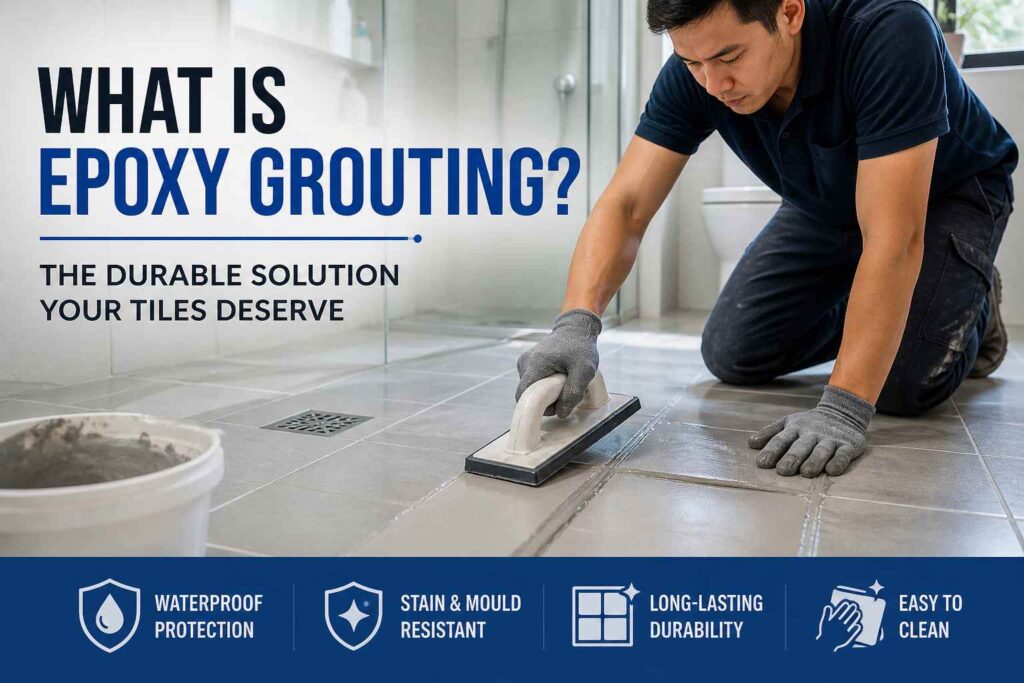
What is Epoxy Grouting? Epoxy grouting is a tile jointing method that uses epoxy resin-based grout to fill the gaps between tiles, creating a stronger, more water-resistant, and more stain-resistant finish than traditional cement grout. In Singapore, epoxy grouting is especially useful for bathrooms, kitchens, service yards, balconies, and commercial spaces because local homes deal with high humidity, frequent rain, and heavy daily tile usage.
For homeowners, landlords, facility managers, and renovation contractors, epoxy grout is not just about making tile joints look cleaner. It helps protect tiled surfaces from mold, discolouration, cracking, water absorption, and premature wear. That is why many HDB flats, condominiums, landed homes, cafés, offices, and retail units across Singapore choose epoxy grout for long-term tile protection.
What is Epoxy Grouting?
Epoxy grouting is the process of applying epoxy grout into the joints between tiles. Epoxy grout is usually made from epoxy resin, a hardener, and filler materials. Once mixed and applied correctly, it cures into a dense, durable joint that is far less porous than ordinary cement-based grout.
In simple terms, grout is the material that fills the lines between your tiles. Without proper grout, water, dirt, soap residue, grease, and bacteria can settle between the tiles. Over time, those tile joints can turn black, crack, smell damp, or become difficult to clean.
Epoxy grout is designed to solve those problems more effectively than standard cement grout.
Epoxy grouting is a tile finishing service that fills tile gaps with epoxy-based grout to create durable, water-resistant, stain-resistant, and easier-to-clean tile joints.
Why Epoxy Grouting Matters in Singapore
Singapore’s climate makes tile grout work harder than it would in many other places. The Meteorological Service Singapore describes Singapore’s rainfall as plentiful, with rain on an average of 171 days a year and a 1991 to 2020 long-term mean annual rainfall of 2,113.3 mm. Heavy rain is also often accompanied by thunder.
That matters because many tiled areas in Singapore are exposed to moisture almost every day. Bathrooms stay humid after showers. Service yards get wet from laundry work. Kitchens deal with grease, sauces, cleaning chemicals, and regular mopping. Balconies and outdoor tiled areas are exposed to rain and heat.
In HDB flats and condominiums, these problems are very common. In 2025, 77.2% of Singapore resident households lived in HDB dwellings, while 17.9% lived in condominiums and other apartments, according to SingStat. This means a large share of local homes rely on tiled toilets, kitchens, and service yards that need practical, long-lasting grout solutions.
Epoxy Grout vs Cement Grout: What’s the Difference?
Traditional cement grout is still widely used because it is cheaper and easier to apply. However, it is porous. That means it can absorb water, stains, soap residue, and dirt more easily.
Epoxy grout is different. Once cured, it forms a tougher and more water-resistant joint.
| Feature | Epoxy Grout | Cement Grout |
| Water resistance | High | Lower |
| Stain resistance | High | Moderate to low |
| Mould resistance | Better in wet areas | Can trap moisture |
| Durability | Strong and long-lasting | Can crack or wear faster |
| Cleaning | Easier to wipe | Often needs scrubbing |
| Cost | Higher upfront | Lower upfront |
| Installation | More technical | Easier |
| Best for | Bathrooms, kitchens, commercial spaces, wet areas | Dry walls or low-use areas |
Cement grout may still be suitable for dry feature walls, low-traffic areas, or budget-sensitive projects. But for wet and high-use spaces in Singapore, epoxy grout is usually the better long-term choice.
Main Benefits of Epoxy Grouting
1. Better Water Resistance
One of the biggest reasons people choose epoxy grouting in Singapore is water resistance. Bathroom grout often fails because moisture gets into the joints and stays there. Over time, this can lead to mold, dark grout lines, and weak joints.
Epoxy grout helps reduce this risk because it is dense and non-porous compared with cement grout.
2. Stronger Protection Against Mould and Mildew
Mouldy grout is one of the most common complaints in Singapore bathrooms. You may clean the toilet tiles on Sunday, only to see black stains return within a week.
Epoxy grout does not guarantee that mold will never appear, especially if the bathroom has poor ventilation. However, it gives molds less opportunity to grow inside the grout lines because it absorbs less moisture.
3. Easier Cleaning
Epoxy grout is easier to wipe clean because stains sit more on the surface instead of soaking deep into the grout. This is useful in:
- HDB bathrooms
- Condo kitchens
- Service yards
- Commercial kitchens
- Office pantries
- Retail washrooms
- Food and beverage spaces
For kitchen tile floors, epoxy grout is especially helpful because cooking oil, sauces, and food stains can quickly discolour cement grout.
4. Longer-Lasting Tile Joints
When installed properly, epoxy grout can last many years. ADR Construction notes that epoxy grout is known for its longevity and may last 10 to 20 years depending on conditions and maintenance.
The actual lifespan depends on tile condition, workmanship, cleaning habits, water exposure, and whether there are underlying waterproofing or movement issues.
5. Better Appearance
Clean grout lines can make an old bathroom or kitchen look newer without replacing all the tiles. This is especially useful for resale flats, rental units, older condos, and commercial spaces preparing for handover.
Where Can Epoxy Grouting Be Used?
Epoxy grouting is suitable for many tiled areas, especially where water, stains, or heavy use are expected.
Common areas include:
- Bathroom floors
- Shower walls
- Toilet wall tiles
- Kitchen floors
- Kitchen backsplashes
- Service yards
- Laundry areas
- Balconies
- Commercial washrooms
- Restaurant kitchens
- Office pantries
- Retail shop floors
- Industrial tiled areas
ADR Construction provides epoxy grout solutions for homes, commercial spaces, and industrial facilities across Singapore. Their service page also lists epoxy grouting installation, tile epoxy services, grout repair, toilet grout, floor grout solutions, tile regrouting, and expert consultation.
Real Local Examples of Epoxy Grouting Problems
Example 1: Mouldy HDB Bathroom Grout in Tampines
A common case is an older HDB bathroom where the grout around the shower area turns black even after repeated scrubbing. The owner may try bleach, grout pens, or DIY cement grout repair. These may improve the look for a short time, but the stains often return because the old grout is still porous.
A professional epoxy regrouting job would usually involve removing the damaged grout, cleaning the tile joints, applying epoxy grout, and advising the owner on ventilation and cleaning.
Example 2: Stained Kitchen Grout in a Condo Near Orchard
In condo kitchens, light-coloured grout can quickly absorb oil, curry stains, soy sauce, and cleaning residue. Once stains soak in, mopping does not remove them fully.
Epoxy grout is a better fit here because it resists stains more effectively and makes daily cleaning easier.
Example 3: Cracked Floor Grout Near Marina Bay
ADR Construction shares a local case study where a customer near Marina Bay had cracked kitchen floor grout. After assessment, the team recommended epoxy grout to repair the cracks and improve the kitchen’s appearance and cleaning ease.
This is a good example of why inspection matters. Cracked grout may look like a small cosmetic issue, but it can point to wear, poor bonding, hollow tiles, movement, or water exposure.
How Epoxy Grouting Is Done
A proper epoxy grouting job is not just “apply new grout over old grout.” That is one of the most common mistakes.
Here is the usual professional process.
Step 1: Inspect the Tiled Area
The contractor checks:
- Tile condition
- Existing grout depth
- Cracks
- Hollow tiles
- Loose tiles
- Water seepage
- Floor traps
- Corners and wall joints
- Silicone condition
- Signs of waterproofing failure
Step 2: Remove Damaged or Old Grout
Old grout must be removed properly so the new epoxy grout has enough depth to bond. Applying epoxy grout over dirty, shallow, or loose grout can lead to weak results.
Step 3: Clean the Tile Joints
Dust, soap scum, grease, mould, and moisture must be cleared. This step is important because epoxy grout needs a clean surface to grip properly.
Step 4: Mix the Epoxy Grout
Epoxy grout has a resin and hardener component. The ratio must be correct. If it is mixed wrongly, it may cure poorly, become sticky, or fail early.
Step 5: Apply the Grout
The epoxy grout is pressed firmly into the tile joints. The goal is to fill the joints evenly without gaps.
Step 6: Clean Excess Epoxy
This step requires skill. Epoxy haze can be difficult to remove once it hardens on tile surfaces. That is why DIY epoxy grouting often becomes messy.
Step 7: Allow Proper Curing
The tiled area should be kept dry according to the product’s curing instructions. Using the bathroom or kitchen too early can affect the final result.
Common Client Mistakes With Tile Grout
As a local grouting contractor, these are the mistakes we often see in Singapore homes and commercial units.
Mistake 1: Scrubbing Mould Without Fixing the Grout
Cleaning helps, but it does not repair damaged grout. If the grout is porous, cracked, or missing, the black stains will usually return.
Mistake 2: Applying New Grout Over Old Grout
This may look fine at first, but it often fails because the new material cannot bond properly to dirty or loose grout.
Mistake 3: Ignoring Hollow Tiles
If tiles are hollow or moving, grout can crack again even after replacement. The tile issue should be assessed before regrouting.
Mistake 4: Using Harsh Chemicals Too Often
Strong acidic cleaners can damage tile surfaces, metal fittings, and some joint materials. Always check whether the cleaner is suitable for your tile and grout type.
Mistake 5: Thinking Epoxy Grout Fixes Waterproofing Leaks
Epoxy grout improves tile joint water resistance, but it cannot solve every water problem. If water is leaking into another room, ceiling, or neighbouring unit, you may need waterproofing repair or plumbing inspection.
Safety Warnings Before Epoxy Grouting
Epoxy grout is durable, but it must be handled correctly.
Important safety and quality warnings:
- Do not use epoxy grout as a shortcut for failed waterproofing.
- Do not grout over active leaks.
- Do not apply grout to wet or contaminated joints.
- Do not use metal brushes on newly finished grout.
- Do not use the bathroom before curing is complete.
- Do not assume all tile surfaces are safe from epoxy haze.
- Do not attempt large DIY epoxy grouting jobs without proper tools and cleaning knowledge.
For commercial kitchens, clinics, childcare centres, and F&B outlets, poor grout work can also affect hygiene and maintenance standards.
Epoxy Grouting Cost in Singapore
Epoxy grouting cost in Singapore depends on the size, condition, and complexity of the job. ADR Construction states that epoxy grout pricing depends on project size and installation complexity, and that epoxy grout is typically priced higher than cement grout because of its durability.
The main cost factors are:
- Total floor or wall area
- Tile size
- Grout line width
- Depth of old grout removal required
- Amount of damaged grout
- Mould or stain severity
- Whether tiles are hollow or cracked
- Bathroom, kitchen, balcony, or commercial area
- Accessibility
- Type and colour of epoxy grout
- Labour time
- Site protection and cleanup needs
Is Epoxy Grouting Worth the Higher Cost?
For wet areas, usually yes. Cement grout may be cheaper upfront, but if it keeps turning black, cracking, or absorbing stains, you may spend more on repeated cleaning and repairs.
Epoxy grout is a practical investment for:
- Bathrooms used daily
- Rental units
- Resale flat upgrades
- Condo kitchens
- High-traffic commercial floors
- F&B and pantry areas
- Homes with children or elderly family members
- Owners who want easier cleaning
Maintenance Tips After Epoxy Grouting
Epoxy grout is low-maintenance, but it is not no-maintenance. Good cleaning habits help the grout last longer and keep the tiles looking fresh.
Daily or Weekly Care
- Rinse soap residue after showering.
- Keep bathroom windows or ventilation fans open where possible.
- Wipe excess water from wet corners.
- Mop kitchen floors after greasy cooking.
- Clean spills quickly.
- Use mild cleaners suitable for tiles.
- Avoid letting dirty water sit around floor traps.
Monthly Checks
Once a month, inspect:
- Shower corners
- Floor traps
- Wall-to-floor joints
- Areas under sinks
- Kitchen splash zones
- Balcony edges
- Service yard corners
Look for cracks, missing grout, loose tiles, or recurring damp smells.
What Not to Do
Avoid:
- Metal brushes
- Overuse of strong acid cleaners
- Scraping grout with sharp tools
- Sealing over dirty grout
- Ignoring cracked tiles
- Covering active leaks with grout
Prevention Tips: How to Stop Grout From Turning Black Again
To keep tile grout cleaner for longer, focus on moisture control and regular cleaning.
Use these practical steps:
- Improve ventilation after showers.
- Dry wet corners where water sits for long periods.
- Clean soap scum early before it hardens.
- Use suitable tile cleaners instead of harsh chemicals.
- Fix leaks quickly under basins, sinks, and pipes.
- Check floor traps for trapped grime.
- Repair cracked grout early before water enters deeper.
- Choose epoxy grout for areas that are always wet or stained.
In Singapore bathrooms, the goal is not just to clean grout. The goal is to reduce moisture absorption and stop dirt from settling deep into the joints.
Epoxy Grouting Services Across Singapore
ADR Construction serves a wide range of Singapore neighbourhoods, including Central Singapore, City Centre, Orchard, Bedok, Tampines, Woodlands, Yishun, Jurong, Bukit Batok, Sentosa, and Harbourfront.
Our epoxy grouting services are suitable for:
Central Singapore
For homes and commercial units in City Centre, Orchard, Novena, Bugis, Tanjong Pagar, Marina Bay, and River Valley, epoxy grout is useful for condo bathrooms, office pantries, retail washrooms, and commercial kitchens.
East Singapore
For Bedok, Tampines, Pasir Ris, Marine Parade, Katong, and Paya Lebar, many homes deal with older bathroom grout, kitchen stains, and service yard moisture. Epoxy grout is a strong option for HDB and condo tile restoration.
North Singapore
For Woodlands, Yishun, Sembawang, Ang Mo Kio, and Admiralty, epoxy regrouting is commonly used in family bathrooms, resale flats, and high-use kitchens.
West Singapore
For Jurong, Bukit Batok, Clementi, Bukit Timah, Choa Chu Kang, and Lakeside, epoxy grout works well for HDB bathrooms, condo kitchens, balconies, and commercial flooring.
South Singapore
For Sentosa, Harbourfront, Telok Blangah, Bukit Merah, and Queenstown, epoxy grout is suitable for homes, rental units, hospitality spaces, and wet areas exposed to frequent cleaning.
When to Call a Professional in Singapore
Call a professional epoxy grouting contractor in Singapore when the grout problem keeps coming back or when the tiled area is exposed to water every day.
You should get an inspection if you notice:
- Black grout that returns after cleaning
- Cracked grout
- Missing grout
- Powdery grout
- Loose or hollow tiles
- Water seepage near tiled areas
- Damp smells in the bathroom
- Stained kitchen grout
- Slippery bathroom floors
- Grout gaps around floor traps
- Mould around shower walls
- Failed DIY grout repair
Professional help is also recommended before selling or renting out a property. Fresh, clean grout can make bathrooms and kitchens look better during viewings and handovers.
Why Choose Us for Epoxy Grouting in Singapore
ADR Construction Pte Ltd provides epoxy grouting solutions for residential, commercial, and industrial spaces across Singapore. The company states that it has over 10 years of experience in the construction industry and offers services including epoxy grouting installation, grout repair, toilet grout, floor grout, tile regrouting, and expert consultation.
Here is why clients choose a professional team instead of taking the DIY route.
Local Experience With Singapore Properties
We understand the tile problems common in HDB flats, BTO units, condominiums, landed houses, F&B spaces, offices, clinics, and retail units.
Proper Surface Preparation
Good grout work starts before the epoxy is applied. Old grout removal, cleaning, drying, and joint preparation all affect the final result.
Durable Materials
ADR Construction states that it uses premium epoxy grout products for durability, stain resistance, moisture resistance, and wear resistance.
Honest Recommendations
Not every problem needs epoxy grout. Sometimes the right solution may involve tile replacement, silicone repair, waterproofing inspection, or plumbing checks. A good contractor should explain the difference clearly.
Transparent Quotations
ADR Construction states that it provides clear, upfront quotes with no hidden costs.
Get Professional Epoxy Grouting in Singapore
If your tile grout is black, cracked, stained, loose, or hard to clean, epoxy grouting can give your bathroom, kitchen, balcony, or commercial space a stronger and cleaner finish. It is a practical upgrade for Singapore homes and businesses that deal with humidity, moisture, daily washing, and heavy foot traffic.
For reliable workmanship, local experience, and durable tile joint protection, visit ADR Construction’s Epoxy Grouting Service in Singapore page and request a quote today.
FAQs About Epoxy Grouting in Singapore
What is epoxy grouting?
Epoxy grouting is the process of filling tile joints with epoxy-based grout to create stronger, more water-resistant, and more stain-resistant tile lines.
Is epoxy grouting good for Singapore bathrooms?
Yes, epoxy grouting is good for Singapore bathrooms because it handles humid, wet conditions better than ordinary cement grout.
How much does epoxy grouting cost in Singapore?
Epoxy grouting cost in Singapore depends on the area size, tile condition, grout removal work, and installation complexity.
Can epoxy grout stop water leaks?
Epoxy grout can improve tile joint water resistance, but it cannot fix serious waterproofing failure, pipe leaks, or structural seepage.
How long does epoxy grout last?
Epoxy grout can last for many years when installed properly and maintained with suitable cleaning habits.
Where can I use epoxy grout in my home?
You can use epoxy grout in bathrooms, kitchens, service yards, balconies, laundry areas, and other tiled spaces exposed to moisture or stains.
Do I need a professional for epoxy grouting in Singapore?
Yes, professional epoxy grouting is recommended because epoxy grout sets quickly, requires correct mixing, and can leave a difficult haze if applied incorrectly.