
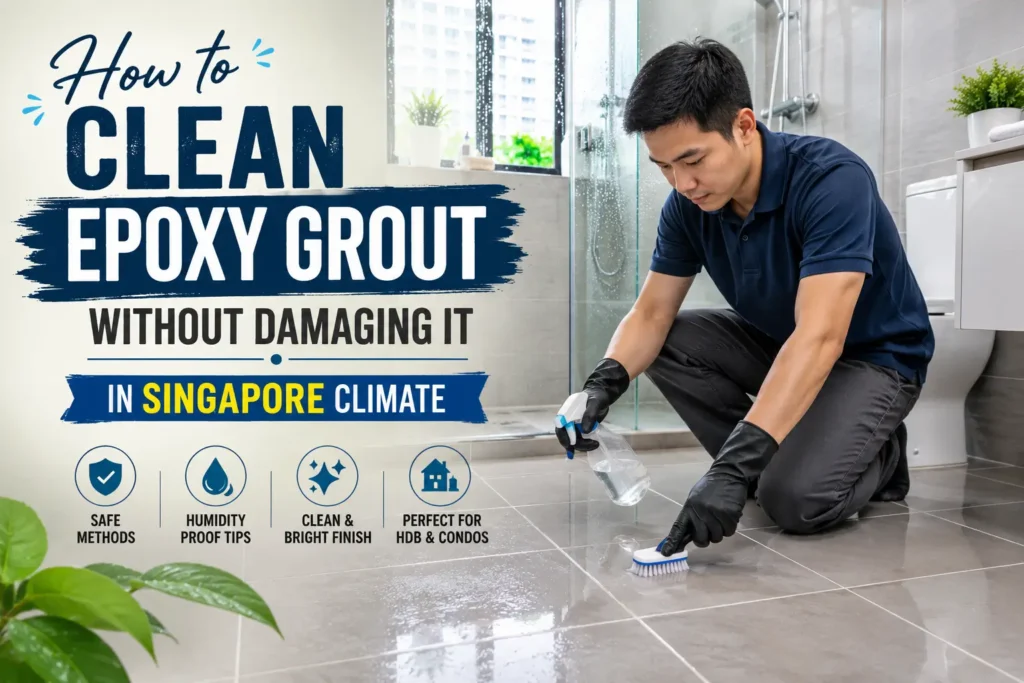
To clean epoxy grout without damaging it in Singapore, use a pH-neutral cleaner, warm water, a soft nylon brush, and a microfiber cloth. Rinse the grout properly, dry the area after cleaning, and avoid harsh acidic cleaners, metal brushes, and strong chemical mixtures.
This matters even more in Singapore because bathrooms and kitchens stay damp easily. Singapore’s mean annual relative humidity is around 82%, and it rains on about 171 days a year, with long-term annual rainfall averaging 2,113.3 mm. That kind of wet, humid climate can make soap scum, grime, and surface mold appear faster, even on durable epoxy grout.
Epoxy grout is tougher than normal cement grout, but it is not maintenance-free. With the right cleaning method, you can keep your HDB toilet, condo bathroom, kitchen floor, balcony, or service yard looking clean without dulling or weakening the grout surface.
Why Cleaning Epoxy Grout Is Different in Singapore
Singapore’s climate creates a few grout problems that homeowners in drier countries may not face as often.
1. High Humidity Keeps Bathrooms Damp
In many Singapore HDB flats and condos, bathrooms do not always dry quickly after use. Some toilets have small windows, limited airflow, or enclosed shower areas. When water sits on the floor, soap residue and body oils can collect along the grout lines.
Over time, the grout may look dark, cloudy, or sticky, even though the epoxy itself is still intact.
2. Frequent Rain Slows Down Drying
During rainy periods, especially around the wetter monsoon months, towels, floors, and enclosed toilets take longer to dry. This can affect homes in areas like Tampines, Bedok, Punggol, Sengkang, Woodlands, Jurong West, Toa Payoh, Bishan, and Queenstown.
The issue is not always “dirty grout.” Sometimes it is trapped moisture, poor ventilation, or cleaning residue that was not rinsed away.
3. Soap Scum Can Sit on Top of Epoxy Grout
Epoxy grout does not absorb water like cement grout, but dirt can still sit on the surface. Common buildup includes:
- Shampoo residue
- Body wash film
- Toothpaste splashes
- Cooking oil
- Dirty mop water
- Hard-water marks
- Mould on surface grime
That is why gentle but regular cleaning works better than waiting until the grout looks badly stained.
The Safest Way to Clean Epoxy Grout
Here is the simple answer: clean epoxy grout with a mild pH-neutral cleaner, soft brush, clean water, and proper drying.
You Will Need
- pH-neutral tile cleaner
- Warm water
- Soft nylon brush or soft toothbrush
- Microfiber cloth
- Sponge
- Squeegee
- Dry towel
- Gloves
- Spray bottle
Avoid using steel wool, metal scrapers, rough scouring pads, strong acids, and random chemical mixtures.
How to Clean Epoxy Grout Without Damaging It
Step 1: Remove Loose Dirt First
Sweep, vacuum, or wipe the tiled surface before applying water. This is especially important for kitchen floors and balcony tiles where sand, dust, or small grit can scratch the tile surface during scrubbing.
Step 2: Apply a Mild Cleaner
Spray or sponge a pH-neutral tile cleaner onto the grout lines. Let it sit for a few minutes, but do not allow the cleaner to dry on the surface.
For routine HDB toilet cleaning, a mild cleaner is usually enough. You do not need harsh chemicals for weekly maintenance.
Step 3: Scrub Gently Along the Grout Lines
Use a soft nylon brush and scrub along the grout lines with light pressure. Do not attack the grout with force. If you need to scrub hard for a long time, the issue may not be simple surface dirt.
Professional tip: Pay attention to shower corners, floor trap areas, and edges near silicone sealant. These areas collect the most grime in Singapore bathrooms.
Step 4: Rinse Thoroughly
Use clean water to rinse away the cleaner. This step is often skipped, but it is one of the most important parts.
Leftover cleaning solution can leave a sticky film. That film attracts more dirt, which makes the grout look dirty again within a few days.
Step 5: Dry the Surface
Use a microfiber cloth, dry towel, or squeegee. In Singapore’s humid climate, drying is not optional. It helps reduce water marks, soap residue, and mold growth on surface grime.
Step 6: Improve Airflow
After cleaning or showering:
- Open the bathroom door
- Turn on the exhaust fan
- Open the window if available
- Keep bath mats dry
- Avoid leaving wet towels on the floor
This small habit makes a big difference in enclosed condo bathrooms and HDB toilets.
What Not to Use on Epoxy Grout
Epoxy grout is durable, but the wrong cleaning method can still cause problems.
Avoid Acidic Cleaners Unless Approved
Do not use vinegar, acidic toilet cleaners, or strong descalers as your default cleaner. These may affect nearby tiles, silicone, or finishes.
Avoid Metal Brushes
Metal brushes can scratch tile surfaces and may dull the appearance of grout lines.
Avoid Mixing Chemicals
Never mix bleach with ammonia, vinegar, acid cleaners, or unknown cleaning products. This can create dangerous fumes.
Avoid Over-Scrubbing
If black marks keep returning, more scrubbing is not always the answer. The problem may be failed silicone, trapped moisture, damaged grout, poor drainage, or mold sitting behind a surface layer.
Common Client Mistakes We See in Singapore Homes
Mistake 1: Using Too Much Detergent
Many homeowners believe cleaner means better results. In reality, too much detergent can leave residue on grout lines. This is common in kitchens where mop water spreads oil and soap across the floor.
Mistake 2: Not Drying the Bathroom
A clean bathroom can still develop stains if it stays wet all day. This is especially common in family homes in Punggol, Sengkang, Tampines, Yishun, and Jurong West where bathrooms are used many times daily.
Mistake 3: Scrubbing with Abrasive Pads
Rough pads may make the grout look cleaner at first, but they can damage nearby tile surfaces and make future cleaning harder.
Mistake 4: Ignoring Failed Silicone
Black mould often appears on silicone edges before it affects the grout. If the silicone around the wall-floor joint or shower screen is failing, cleaning the grout alone will not solve the problem.
Mistake 5: Waiting Too Long Before Re-Grouting
If grout is cracked, missing, loose, or stained below the surface, cleaning will not restore it. At that point, professional grout repair or epoxy re-grouting may be needed.
Real Local Examples
Example 1: HDB Toilet in Tampines
A homeowner notices black lines near the shower corner even after weekly cleaning. On inspection, the epoxy grout is still fine, but the silicone joint beside it is mouldy. The correct fix is not aggressive grout scrubbing. It is cleaning the surface, removing failed silicone if needed, and improving ventilation.
Example 2: Condo Bathroom in Novena
A small enclosed bathroom develops cloudy grout lines. The cause is not damaged epoxy grout. It is shampoo residue and poor rinsing. A pH-neutral cleaner, clean water rinse, and daily squeegee routine solve the issue.
Example 3: Kitchen Floor in Jurong West
The grout feels sticky after mopping. The issue is greasy mop water and too much detergent. The solution is a mild degreasing cleaner safe for epoxy grout, followed by a clean-water rinse and dry mop.
Example 4: Service Yard in Bedok
Rainy weather and laundry moisture keep the floor damp. The grout stays darker than surrounding areas. Better airflow, regular drying, and checking for drainage issues help prevent recurring marks.
Epoxy Grout Cleaning Cost in Singapore
For light surface cleaning, DIY costs are low. You may only need a pH-neutral cleaner, a soft brush, a sponge, and microfiber cloths.
Professional costs depend on the condition of the grout, size of the area, tile layout, access, and whether old grout needs to be removed. Local Singapore market references commonly place epoxy grouting around S$7 to S$15 per square foot for many residential projects, while some premium or complex work may cost more.
Factors That Affect Cost
- Bathroom, kitchen, balcony, or commercial area
- HDB, condo, landed, shop, or industrial property
- Floor only or floor and wall
- Tile size and grout joint width
- Existing grout condition
- Mould, cracks, or missing grout
- Need for old grout removal
- Urgent or after-hours work
- Material type and finish
Cleaning vs Re-Grouting
Cleaning is suitable when the grout is intact and the problem is surface dirt. Re-grouting is better when the grout is cracked, missing, badly stained, or no longer protecting the tile joints.
Maintenance Tips to Keep Epoxy Grout Clean Longer
1. Rinse Shower Floors After Use
A quick rinse removes shampoo, soap, and body wash before they dry on the grout.
2. Squeegee Wet Areas
Use a squeegee on shower floors and wall tiles after bathing. It takes less than a minute and helps prevent cloudy residue.
3. Keep the Bathroom Ventilated
Open the door or window after showering. Use the exhaust fan if your bathroom has one.
4. Clean Weekly
Do a light clean once a week with a mild cleaner. This is usually enough for most HDB and condo bathrooms.
5. Deep Clean Monthly
Once a month, focus on corners, wall-floor joints, floor traps, and areas behind the toilet bowl or vanity.
6. Fix Leaks Early
A leaking bidet spray, tap, or shower mixer can keep grout constantly wet. That creates recurring stains and may lead to bigger tile problems.
7. Check Silicone Joints
If silicone is peeling, blackened, or soft, replacing it may be more effective than repeatedly cleaning the grout.
Epoxy Grout Cleaning Across Singapore and Nearby Areas
We provide epoxy grout cleaning, repair, and re-grouting support across Singapore, including homes and commercial spaces in:
Central Singapore
Orchard, Novena, Toa Payoh, Bishan, Bukit Timah, Queenstown, Bukit Merah, River Valley, Tiong Bahru, and City Hall.
East Singapore
Tampines, Bedok, Pasir Ris, Simei, Marine Parade, Katong, Eunos, Paya Lebar, and Changi.
North Singapore
Woodlands, Yishun, Sembawang, Admiralty, Canberra, Ang Mo Kio, and Lentor.
North-East Singapore
Punggol, Sengkang, Hougang, Buangkok, Kovan, Serangoon, and Fernvale.
West Singapore
Jurong West, Jurong East, Bukit Batok, Bukit Panjang, Choa Chu Kang, Clementi, Boon Lay, and West Coast.
Whether you live in a BTO flat, resale HDB, condo unit, landed property, shop, restaurant, or warehouse, the cleaning approach should match Singapore’s wet conditions and the actual condition of your grout.
When to Call a Professional in Singapore
Call a professional epoxy grouting contractor in Singapore if your grout is cracked, missing, mouldy, sticky, loose, or still stained after proper cleaning.
You should also get help if:
- Black spots return within days
- The bathroom smells musty
- Water sits in grout joints
- Silicone edges are mouldy or peeling
- Tiles feel hollow or loose
- Grout lines look uneven or sunken
- You are unsure what cleaner was previously used
- You are preparing a resale flat, rental unit, or renovation handover
A professional can check whether the problem is surface dirt, failed silicone, damaged grout, water seepage, or poor workmanship from a previous installation.
Why Choose Us for Epoxy Grouting Service in Singapore
ADR Construction Pte Ltd provides epoxy grouting services for residential, commercial, and industrial spaces in Singapore. The company highlights professional workmanship, durable materials, clean finishing, on-time delivery, waterproof finishing, stain and chemical resistance, and more than 10 years of construction experience in Singapore. (ADR Construction Pte Ltd)
Local Experience
We understand the common issues in Singapore homes, from damp HDB toilets to enclosed condo bathrooms and greasy kitchen floors.
Proper Surface Assessment
We do not treat every dirty grout line the same way. Some areas need cleaning. Some need silicone replacement. Others need epoxy re-grouting.
Durable Materials
Epoxy grout is selected for wet areas because it offers better resistance to moisture, stains, and daily wear than traditional cement grout.
Transparent Advice
You get clear recommendations based on the condition of your tiles, grout lines, and wet areas.
Residential and Commercial Support
We handle bathrooms, kitchens, heavy-duty areas, commercial spaces, and industrial flooring.
Ready to Restore Your Epoxy Grout?
Clean epoxy grout starts with the right method, but long-term results depend on good installation, proper materials, and regular maintenance. If your grout still looks stained, cracked, mouldy, or uneven after cleaning, it may be time for a professional inspection.
For expert help, visit our main service page here: Epoxy Grouting Service Singapore
Get a free quote and let our Singapore epoxy grouting team help restore your bathroom, kitchen, commercial floor, or wet area with a clean, durable finish.
7 Local FAQs
1. What is the best way to clean epoxy grout in Singapore?
The best way to clean epoxy grout in Singapore is to use a pH-neutral cleaner, soft brush, clean water rinse, and proper drying after cleaning.
2. Can I use vinegar to clean epoxy grout?
Vinegar is not recommended for routine epoxy grout cleaning because acidic cleaners may affect nearby tile finishes, silicone, or grout appearance.
3. Why does my bathroom grout turn black in Singapore?
Bathroom grout often turns black because Singapore’s humidity allows mould to grow on soap scum, body oil, and damp surface residue.
4. How often should I clean epoxy grout in an HDB toilet?
Most HDB toilets should have light epoxy grout cleaning once a week and deeper cleaning around corners and floor traps once a month.
5. Is epoxy grout better than cement grout for Singapore bathrooms?
Epoxy grout is generally better for Singapore bathrooms because it resists water, stains, and daily wear more effectively than cement-based grout.
6. When should I re-grout instead of clean the grout?
You should re-grout when the grout is cracked, missing, loose, deeply stained, or no longer protecting the tile joints.
7. Do you provide epoxy grouting services across Singapore?
Yes, epoxy grouting services are available across Singapore, including Tampines, Bedok, Punggol, Sengkang, Woodlands, Jurong, Toa Payoh, Bishan, Queenstown, and nearby areas.