
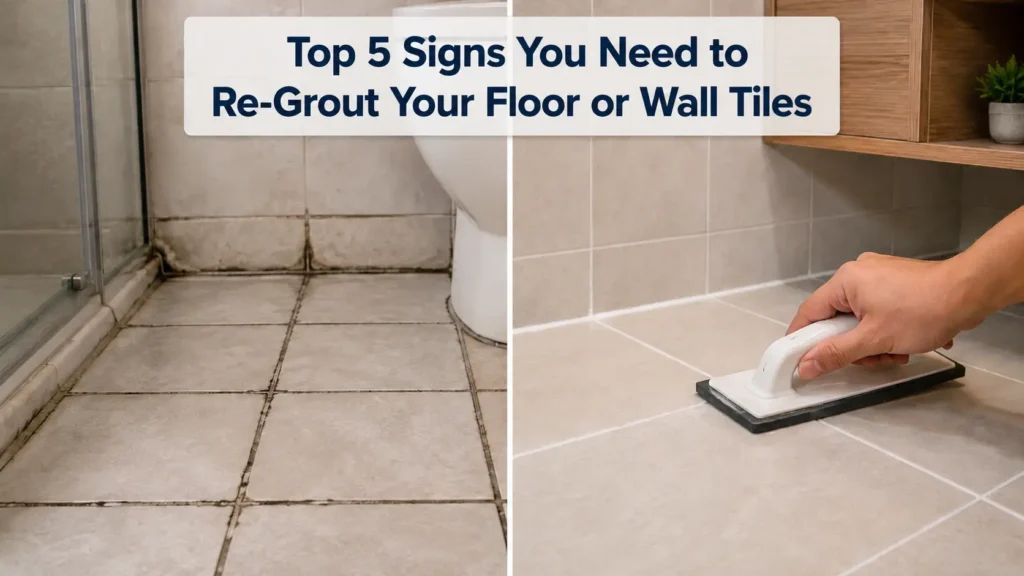
You may need to re-grout your floor or wall tiles if the grout is cracked, missing, mouldy, stained, or letting water seep through the tile joints. These are common tile regrouting signs Singapore homeowners should not ignore, especially in bathrooms, kitchens, balconies, and service yards.
In Singapore’s humid climate, grout can wear out faster than expected. Once grout fails, water and dirt can enter the gaps between tiles. Over time, this can lead to mold, loose tiles, bad smells, and possible water seepage.
This guide explains the top signs you need tile re-grouting, what causes grout damage, how much re-grouting may cost, and when to call a professional flooring contractor in Singapore.
What Is Tile Re-Grouting?
Tile re-grouting is the process of removing old or damaged grout and replacing it with new grout.
Grout is the material between your tiles. It fills the joints, protects tile edges, and helps keep dirt and moisture out. When grout becomes weak, cracked, or dirty, your tiles may look old even if the tiles are still in good condition.
Re-grouting can help improve:
- Tile appearance
- Hygiene
- Water resistance
- Bathroom cleanliness
- Tile joint strength
- Long-term maintenance
In many cases, re-grouting is more affordable than replacing all your tiles.
Why Grout Problems Are Common in Singapore
Grout issues are common in Singapore homes because many tiled areas are exposed to moisture every day.
This is especially true for:
- HDB bathrooms
- Condo toilets
- Wet kitchens
- Service yards
- Balconies
- Commercial washrooms
- F&B kitchen floors
- Pantry areas
Singapore has a warm and humid climate. Bathrooms may also have limited airflow, especially in older HDB flats and compact condo units. Because of this, grout lines can stay damp for longer.
When moisture stays inside grout, it can lead to mould, stains, cracks, and soft grout.
Common areas where Singapore homeowners notice grout problems include Tampines, Bedok, Ang Mo Kio, Toa Payoh, Sengkang, Punggol, Woodlands, Jurong, Yishun, Queenstown, Bukit Timah, and Marine Parade.
Your Grout Is Cracked, Missing, or Crumbling
Cracked grout is one of the clearest signs that you need re-grouting.
At first, small cracks may not look serious. However, these cracks can allow water, soap, dirt, and bacteria to enter the tile joints.
Common Signs of Cracked Grout
You may notice:
- Thin cracks between tiles
- Missing grout lines
- Grout falling out
- Powdery grout
- Small gaps around tile edges
- Uneven grout lines
- Dark lines where water has entered
Why This Is a Problem
Cracked grout can become worse over time. If water enters the joints, it may weaken the surface below the tiles. It may also make tiles loose or hollow.
This is common in shower areas, bathroom floors, and kitchen tiles. It can also happen on balconies because of rain exposure.
Local Example
A homeowner in an older HDB flat in Toa Payoh may notice grout breaking around the bathroom floor trap. This often happens because the area gets wet daily. If the damaged grout is left alone, water may enter below the tiles.
Expert Advice
Do not apply new grout over loose old grout. The damaged grout should be removed first. The joints must also be cleaned and dried before new grout is applied.
This helps the new grout bond better and last longer.
Your Grout Has Turned Black, Yellow, or Permanently Stained
Stained grout is another common sign that your tiles need attention.
Some stains can be cleaned. However, deep stains may stay even after scrubbing. When this happens, the grout may be too porous or too old.
Signs Your Grout Is Too Stained
You may need re-grouting if:
- The grout stays black after cleaning
- Yellow stains keep returning
- Bathroom grout looks dirty after washing
- Kitchen grout has oil stains
- The tile surface is clean, but the grout still looks old
- The grout colour is uneven
Why Grout Gets Stained
In bathrooms, stains often come from soap, body oil, shampoo, and moisture.
In kitchens, stains may come from grease, sauces, food spills, curry, or dirty mop water.
In Singapore homes, stained grout is common in wet kitchens, shower floors, and kitchen backsplashes.
Common Client Mistake
Many homeowners use strong chemicals again and again. This may make the grout weaker. It may also damage some tile surfaces.
Instead, if the stains are deep, re-grouting is often a better solution.
Professional Tip
If your tiles are still firm but the grout looks permanently dirty, re-grouting can refresh the whole area without replacing the tiles.
Mould or Mildew Keeps Coming Back
Mold that keeps returning after cleaning is a serious warning sign.
A little surface mold can happen in wet areas. But if mould returns quickly, the grout may be holding moisture inside.
Where Mould Usually Appears
Check these areas:
- Shower corners
- Wall-to-floor joints
- Around floor traps
- Behind toilet bowls
- Under basin cabinets
- Kitchen sink areas
- Service yard corners
- Balcony tile joints
Why This Happens in Singapore
Singapore’s humidity can make bathrooms dry slowly. If there is poor ventilation, moisture stays longer in grout lines.
This creates a good environment for mold and mildew.
Safety Warning
Do not ignore recurring black mold. It may point to trapped moisture. Also, avoid mixing cleaning chemicals. Some chemical mixtures can produce harmful fumes.
Wear gloves when cleaning mouldy grout. Keep the area ventilated.
Best Solution
If mold keeps coming back, basic cleaning may not be enough. Re-grouting with a better grout material, such as epoxy grout, can help reduce future mold and stain problems.
Tiles Feel Loose, Hollow, or Uneven
Loose or hollow tiles can mean the problem is more than just grout.
Sometimes, cracked grout allows water to enter below the tiles. Over time, this can weaken the tile adhesive or base layer.
How to Check for Hollow Tiles
You can do a simple check:
- Tap the tile gently with your knuckle.
- Listen for a hollow sound.
- Compare it with nearby tiles.
- Check if the grout around it is cracked.
- Look for movement when you press the tile.
What Hollow Tiles May Mean
Hollow tiles may be caused by:
- Weak tile adhesive
- Water under the tile
- Poor installation
- Tile movement
- Old grout failure
- Base layer issues
When Re-Grouting Is Not Enough
If the tile is loose, re-grouting alone may not fix the issue. The tile may need to be lifted, reset, or replaced.
This is why a professional inspection is important.
Local Example
In newer estates like Sengkang or Punggol, homeowners may notice hollow sounds in bathroom tiles after years of daily use. If the grout is also cracked, water may already be entering the joints.
Water Seepage or Damp Walls Near Tiles
Water seepage is one of the most urgent tile regrouting signs Singapore homeowners should act on quickly.
If water gets through tile joints, it can affect the surface below the tiles. It may also cause damp smells, stains, or damage to nearby walls.
Signs of Water Seepage
Look out for:
- Damp patches near bathroom walls
- Musty smells
- Wet grout that does not dry
- Peeling paint near tiled areas
- Swollen cabinet panels
- Water marks near skirting
- Complaints from downstairs neighbours
- Stains outside the bathroom wall
Why This Matters
Grout helps protect tile joints, but grout is not the same as waterproofing. If water has already entered below the tiles, the issue may be deeper.
In some cases, you may need waterproofing repair, tile repair, or partial tile replacement.
Professional Advice
Call a flooring contractor quickly if you notice seepage. Early action can prevent bigger repair costs later.
Quick Tile Re-Grouting Checklist
Use this checklist before calling a professional.
You may need tile re-grouting if:
- Your grout is cracked
- Your grout is missing
- The grout feels soft or powdery
- Mould keeps returning
- The grout is badly stained
- Tiles sound hollow
- Water enters tile joints
- Bathroom walls feel damp
- The grout pulls away from tile edges
- The tiled area smells musty
If you notice two or more of these signs, it is time to book a grout inspection.
Re-Grouting vs Tile Replacement
Not every tile problem needs tile replacement. Sometimes, re-grouting is enough.
Re-Grouting May Be Enough If:
- The tiles are still firm
- Only the grout is damaged
- There are no cracked tiles
- There is no major water seepage
- The grout is stained or mouldy
- You want to refresh the tiled area
Tile Replacement May Be Needed If:
- Tiles are loose
- Tiles are cracked
- The floor sounds hollow
- Water has reached the base layer
- The surface is uneven
- Waterproofing has failed
Simple Comparison
| Problem | Re-Grouting Helps? | Tile Replacement Needed? |
| Stained grout | Yes | Usually no |
| Missing grout | Yes | Sometimes |
| Mouldy grout | Yes | Sometimes |
| Loose tile | No | Often yes |
| Cracked tile | No | Yes |
| Water seepage | Sometimes | Sometimes |
A professional can check which option is best for your home.
How Much Does Tile Re-Grouting Cost in Singapore?
Tile re-grouting cost in Singapore depends on the size of the area, tile condition, grout type, and labour required.
There is no one fixed price for every home. A small bathroom floor will cost less than a full bathroom wall and floor re-grouting project.
Main Cost Factors
The cost may depend on:
- Size of the tiled area
- Floor tiles or wall tiles
- Tile size
- Width of grout joints
- Type of grout used
- Old grout condition
- Mould or stain level
- Access to the area
- Whether tiles are loose
- Whether repair work is needed
Cement Grout vs Epoxy Grout
Cement grout is usually cheaper. However, it can stain and absorb moisture more easily.
Epoxy grout usually costs more. However, it offers better moisture resistance, stain resistance, and durability. This makes it a good option for Singapore bathrooms, kitchens, and commercial spaces.
Cost Advice
Avoid choosing only by the lowest price. Poor re-grouting can fail quickly. Good work should include proper removal, cleaning, application, finishing, and curing.
Best Grout Type for Singapore Homes
The best grout depends on the location and use of the tiled area.
Cement-Based Grout
Cement grout is common and affordable.
It may be suitable for:
- Dry walls
- Living rooms
- Bedrooms
- Low-moisture areas
However, it may need more maintenance in wet areas.
Epoxy Grout
Epoxy grout is more durable and moisture-resistant.
It is suitable for:
- Bathrooms
- Kitchens
- Shower floors
- Service yards
- Balconies
- Commercial floors
- F&B spaces
For Singapore wet areas, epoxy grout is often a better long-term choice.
Prevention Tips After Re-Grouting
After re-grouting, proper care helps your grout last longer.
Follow these simple tips:
- Keep bathrooms ventilated
Open the door or window after showering. - Dry wet corners
Wipe areas where water collects. - Use mild cleaners
Avoid strong acidic cleaners. - Clean grout weekly
Use a soft brush and gentle cleaner. - Fix leaks early
Dripping taps can keep grout wet all day. - Avoid metal scrapers
They can damage grout and tiles. - Check grout every 6 to 12 months
Look for cracks, stains, and missing sections. - Use epoxy grout in wet areas
It can reduce future staining and moisture problems.
Tile Re-Grouting Services Across Singapore
Tile grout problems can happen in any part of Singapore. However, the issue may look different depending on the property type.
In mature estates like Ang Mo Kio, Toa Payoh, Bedok, Queenstown, Clementi, Hougang, and Bukit Merah, older bathrooms may have cracked, stained, or powdery grout.
In newer estates like Punggol, Sengkang, Tengah, Bukit Panjang, and Choa Chu Kang, homeowners may want to prevent mold and keep BTO bathrooms looking clean.
In condo and landed areas like Bukit Timah, River Valley, Marine Parade, Serangoon Gardens, Katong, Holland Village, and Novena, many homeowners choose re-grouting to improve appearance and durability.
Commercial tile re-grouting is also common in Raffles Place, Tanjong Pagar, Bugis, Orchard, Jurong East, Paya Lebar, and Changi Business Park.
Areas We Serve
We provide tile re-grouting support across Singapore, including:
- Tampines
- Bedok
- Pasir Ris
- Punggol
- Sengkang
- Hougang
- Serangoon
- Ang Mo Kio
- Bishan
- Toa Payoh
- Queenstown
- Clementi
- Jurong East
- Jurong West
- Woodlands
- Yishun
- Sembawang
- Bukit Batok
- Bukit Panjang
- Bukit Timah
- Marine Parade
- Central Singapore
When to Call a Professional in Singapore
Call a professional flooring contractor in Singapore if your grout is cracked, mouldy, missing, stained, or linked to water seepage.
You should also call a professional if:
- Tiles sound hollow
- Tiles feel loose
- Mould returns quickly
- Water enters tile joints
- A wall feels damp
- Grout falls out during cleaning
- You are unsure if re-grouting is enough
- You want epoxy grout installed properly
DIY re-grouting may work for small touch-ups. However, full bathroom or epoxy re-grouting is best handled by an experienced contractor.
A professional can check the tile condition, remove old grout correctly, and apply the right grout for the space.
Why Choose Us for Tile Re-Grouting in Singapore
Choosing the right flooring contractor matters. Poor grout work may look fine at first, but it can crack, stain, or loosen again within a short time.
Our team helps homeowners and businesses with professional tile re-grouting in Singapore. We work on bathrooms, kitchens, floors, walls, balconies, HDB flats, condos, landed homes, and commercial spaces.
What You Can Expect
You can expect:
- Clear inspection
- Honest advice
- Proper old grout removal
- Clean surface preparation
- Suitable grout recommendations
- Neat workmanship
- Durable finishing
- Transparent pricing
- Practical maintenance tips
We focus on long-term results, not quick cover-ups.
If your grout is cracked, mouldy, missing, or stained, visit Epoxy Grouting Singapore to request a quote.
Final CTA: Fix Your Grout Before It Gets Worse
Damaged grout can make your tiles look dirty and old. More importantly, it can allow water and dirt to enter the joints.
If you notice any of these tile regrouting signs Singapore homeowners often face, do not wait for the problem to spread.
Contact our team today for professional tile re-grouting, epoxy grout, and grout repair services in Singapore.
Visit: https://epoxygroutingsg.com/
7 Local FAQs
1. What are the most common tile regrouting signs in Singapore?
The most common signs are cracked grout, missing grout, mould, deep stains, hollow tiles, and water seepage.
2. How do I know if my bathroom tiles need re-grouting?
You need bathroom tile re-grouting if the grout is black, cracked, loose, mouldy, or wet even after drying.
3. Is epoxy grout better for Singapore bathrooms?
Yes, epoxy grout is usually better for Singapore bathrooms because it resists moisture and stains better than cement grout.
4. Can re-grouting stop water seepage?
Re-grouting may stop minor seepage through tile joints, but deeper waterproofing problems need professional repair.
5. How often should I check my grout?
You should check your bathroom, kitchen, balcony, and service yard grout every 6 to 12 months.
6. Can I re-grout tiles myself?
You can do small touch-ups yourself, but full tile re-grouting is best done by a professional for better bonding and finishing.
7. Do you provide tile re-grouting across Singapore?
Yes, tile re-grouting services are available across Singapore, including Tampines, Bedok, Jurong, Woodlands, Yishun, Sengkang, Punggol, Toa Payoh, and nearby areas.
Top 5 Signs You Need to Re-Grout Your Floor or Wall Tiles
You may need to re-grout your floor or wall tiles if the grout is cracked, missing, mouldy, stained, or letting water seep through the tile joints. These are common tile regrouting signs Singapore homeowners should not ignore, especially in bathrooms, kitchens, balconies, and service yards.
In Singapore’s humid climate, grout can wear out faster than expected. Once grout fails, water and dirt can enter the gaps between tiles. Over time, this can lead to mold, loose tiles, bad smells, and possible water seepage.
This guide explains the top signs you need tile re-grouting, what causes grout damage, how much re-grouting may cost, and when to call a professional flooring contractor in Singapore.
What Is Tile Re-Grouting?
Tile re-grouting is the process of removing old or damaged grout and replacing it with new grout.
Grout is the material between your tiles. It fills the joints, protects tile edges, and helps keep dirt and moisture out. When grout becomes weak, cracked, or dirty, your tiles may look old even if the tiles are still in good condition.
Re-grouting can help improve:
- Tile appearance
- Hygiene
- Water resistance
- Bathroom cleanliness
- Tile joint strength
- Long-term maintenance
In many cases, re-grouting is more affordable than replacing all your tiles.
Why Grout Problems Are Common in Singapore
Grout issues are common in Singapore homes because many tiled areas are exposed to moisture every day.
This is especially true for:
- HDB bathrooms
- Condo toilets
- Wet kitchens
- Service yards
- Balconies
- Commercial washrooms
- F&B kitchen floors
- Pantry areas
Singapore has a warm and humid climate. Bathrooms may also have limited airflow, especially in older HDB flats and compact condo units. Because of this, grout lines can stay damp for longer.
When moisture stays inside grout, it can lead to mould, stains, cracks, and soft grout.
Common areas where Singapore homeowners notice grout problems include Tampines, Bedok, Ang Mo Kio, Toa Payoh, Sengkang, Punggol, Woodlands, Jurong, Yishun, Queenstown, Bukit Timah, and Marine Parade.
Your Grout Is Cracked, Missing, or Crumbling
Cracked grout is one of the clearest signs that you need re-grouting.
At first, small cracks may not look serious. However, these cracks can allow water, soap, dirt, and bacteria to enter the tile joints.
Common Signs of Cracked Grout
You may notice:
- Thin cracks between tiles
- Missing grout lines
- Grout falling out
- Powdery grout
- Small gaps around tile edges
- Uneven grout lines
- Dark lines where water has entered
Why This Is a Problem
Cracked grout can become worse over time. If water enters the joints, it may weaken the surface below the tiles. It may also make tiles loose or hollow.
This is common in shower areas, bathroom floors, and kitchen tiles. It can also happen on balconies because of rain exposure.
Local Example
A homeowner in an older HDB flat in Toa Payoh may notice grout breaking around the bathroom floor trap. This often happens because the area gets wet daily. If the damaged grout is left alone, water may enter below the tiles.
Expert Advice
Do not apply new grout over loose old grout. The damaged grout should be removed first. The joints must also be cleaned and dried before new grout is applied.
This helps the new grout bond better and last longer.
Your Grout Has Turned Black, Yellow, or Permanently Stained
Stained grout is another common sign that your tiles need attention.
Some stains can be cleaned. However, deep stains may stay even after scrubbing. When this happens, the grout may be too porous or too old.
Signs Your Grout Is Too Stained
You may need re-grouting if:
- The grout stays black after cleaning
- Yellow stains keep returning
- Bathroom grout looks dirty after washing
- Kitchen grout has oil stains
- The tile surface is clean, but the grout still looks old
- The grout colour is uneven
Why Grout Gets Stained
In bathrooms, stains often come from soap, body oil, shampoo, and moisture.
In kitchens, stains may come from grease, sauces, food spills, curry, or dirty mop water.
In Singapore homes, stained grout is common in wet kitchens, shower floors, and kitchen backsplashes.
Common Client Mistake
Many homeowners use strong chemicals again and again. This may make the grout weaker. It may also damage some tile surfaces.
Instead, if the stains are deep, re-grouting is often a better solution.
Professional Tip
If your tiles are still firm but the grout looks permanently dirty, re-grouting can refresh the whole area without replacing the tiles.
Mould or Mildew Keeps Coming Back
Mold that keeps returning after cleaning is a serious warning sign.
A little surface mold can happen in wet areas. But if mould returns quickly, the grout may be holding moisture inside.
Where Mould Usually Appears
Check these areas:
- Shower corners
- Wall-to-floor joints
- Around floor traps
- Behind toilet bowls
- Under basin cabinets
- Kitchen sink areas
- Service yard corners
- Balcony tile joints
Why This Happens in Singapore
Singapore’s humidity can make bathrooms dry slowly. If there is poor ventilation, moisture stays longer in grout lines.
This creates a good environment for mold and mildew.
Safety Warning
Do not ignore recurring black mold. It may point to trapped moisture. Also, avoid mixing cleaning chemicals. Some chemical mixtures can produce harmful fumes.
Wear gloves when cleaning mouldy grout. Keep the area ventilated.
Best Solution
If mold keeps coming back, basic cleaning may not be enough. Re-grouting with a better grout material, such as epoxy grout, can help reduce future mold and stain problems.
Tiles Feel Loose, Hollow, or Uneven
Loose or hollow tiles can mean the problem is more than just grout.
Sometimes, cracked grout allows water to enter below the tiles. Over time, this can weaken the tile adhesive or base layer.
How to Check for Hollow Tiles
You can do a simple check:
- Tap the tile gently with your knuckle.
- Listen for a hollow sound.
- Compare it with nearby tiles.
- Check if the grout around it is cracked.
- Look for movement when you press the tile.
What Hollow Tiles May Mean
Hollow tiles may be caused by:
- Weak tile adhesive
- Water under the tile
- Poor installation
- Tile movement
- Old grout failure
- Base layer issues
When Re-Grouting Is Not Enough
If the tile is loose, re-grouting alone may not fix the issue. The tile may need to be lifted, reset, or replaced.
This is why a professional inspection is important.
Local Example
In newer estates like Sengkang or Punggol, homeowners may notice hollow sounds in bathroom tiles after years of daily use. If the grout is also cracked, water may already be entering the joints.
Water Seepage or Damp Walls Near Tiles
Water seepage is one of the most urgent tile regrouting signs Singapore homeowners should act on quickly.
If water gets through tile joints, it can affect the surface below the tiles. It may also cause damp smells, stains, or damage to nearby walls.
Signs of Water Seepage
Look out for:
- Damp patches near bathroom walls
- Musty smells
- Wet grout that does not dry
- Peeling paint near tiled areas
- Swollen cabinet panels
- Water marks near skirting
- Complaints from downstairs neighbours
- Stains outside the bathroom wall
Why This Matters
Grout helps protect tile joints, but grout is not the same as waterproofing. If water has already entered below the tiles, the issue may be deeper.
In some cases, you may need waterproofing repair, tile repair, or partial tile replacement.
Professional Advice
Call a flooring contractor quickly if you notice seepage. Early action can prevent bigger repair costs later.
Quick Tile Re-Grouting Checklist
Use this checklist before calling a professional.
You may need tile re-grouting if:
- Your grout is cracked
- Your grout is missing
- The grout feels soft or powdery
- Mould keeps returning
- The grout is badly stained
- Tiles sound hollow
- Water enters tile joints
- Bathroom walls feel damp
- The grout pulls away from tile edges
- The tiled area smells musty
If you notice two or more of these signs, it is time to book a grout inspection.
Re-Grouting vs Tile Replacement
Not every tile problem needs tile replacement. Sometimes, re-grouting is enough.
Re-Grouting May Be Enough If:
- The tiles are still firm
- Only the grout is damaged
- There are no cracked tiles
- There is no major water seepage
- The grout is stained or mouldy
- You want to refresh the tiled area
Tile Replacement May Be Needed If:
- Tiles are loose
- Tiles are cracked
- The floor sounds hollow
- Water has reached the base layer
- The surface is uneven
- Waterproofing has failed
Simple Comparison
| Problem | Re-Grouting Helps? | Tile Replacement Needed? |
| Stained grout | Yes | Usually no |
| Missing grout | Yes | Sometimes |
| Mouldy grout | Yes | Sometimes |
| Loose tile | No | Often yes |
| Cracked tile | No | Yes |
| Water seepage | Sometimes | Sometimes |
A professional can check which option is best for your home.
How Much Does Tile Re-Grouting Cost in Singapore?
Tile re-grouting cost in Singapore depends on the size of the area, tile condition, grout type, and labour required.
There is no one fixed price for every home. A small bathroom floor will cost less than a full bathroom wall and floor re-grouting project.
Main Cost Factors
The cost may depend on:
- Size of the tiled area
- Floor tiles or wall tiles
- Tile size
- Width of grout joints
- Type of grout used
- Old grout condition
- Mould or stain level
- Access to the area
- Whether tiles are loose
- Whether repair work is needed
Cement Grout vs Epoxy Grout
Cement grout is usually cheaper. However, it can stain and absorb moisture more easily.
Epoxy grout usually costs more. However, it offers better moisture resistance, stain resistance, and durability. This makes it a good option for Singapore bathrooms, kitchens, and commercial spaces.
Cost Advice
Avoid choosing only by the lowest price. Poor re-grouting can fail quickly. Good work should include proper removal, cleaning, application, finishing, and curing.
Best Grout Type for Singapore Homes
The best grout depends on the location and use of the tiled area.
Cement-Based Grout
Cement grout is common and affordable.
It may be suitable for:
- Dry walls
- Living rooms
- Bedrooms
- Low-moisture areas
However, it may need more maintenance in wet areas.
Epoxy Grout
Epoxy grout is more durable and moisture-resistant.
It is suitable for:
- Bathrooms
- Kitchens
- Shower floors
- Service yards
- Balconies
- Commercial floors
- F&B spaces
For Singapore wet areas, epoxy grout is often a better long-term choice.
Prevention Tips After Re-Grouting
After re-grouting, proper care helps your grout last longer.
Follow these simple tips:
- Keep bathrooms ventilated
Open the door or window after showering. - Dry wet corners
Wipe areas where water collects. - Use mild cleaners
Avoid strong acidic cleaners. - Clean grout weekly
Use a soft brush and gentle cleaner. - Fix leaks early
Dripping taps can keep grout wet all day. - Avoid metal scrapers
They can damage grout and tiles. - Check grout every 6 to 12 months
Look for cracks, stains, and missing sections. - Use epoxy grout in wet areas
It can reduce future staining and moisture problems.
Tile Re-Grouting Services Across Singapore
Tile grout problems can happen in any part of Singapore. However, the issue may look different depending on the property type.
In mature estates like Ang Mo Kio, Toa Payoh, Bedok, Queenstown, Clementi, Hougang, and Bukit Merah, older bathrooms may have cracked, stained, or powdery grout.
In newer estates like Punggol, Sengkang, Tengah, Bukit Panjang, and Choa Chu Kang, homeowners may want to prevent mold and keep BTO bathrooms looking clean.
In condo and landed areas like Bukit Timah, River Valley, Marine Parade, Serangoon Gardens, Katong, Holland Village, and Novena, many homeowners choose re-grouting to improve appearance and durability.
Commercial tile re-grouting is also common in Raffles Place, Tanjong Pagar, Bugis, Orchard, Jurong East, Paya Lebar, and Changi Business Park.
Areas We Serve
We provide tile re-grouting support across Singapore, including:
- Tampines
- Bedok
- Pasir Ris
- Punggol
- Sengkang
- Hougang
- Serangoon
- Ang Mo Kio
- Bishan
- Toa Payoh
- Queenstown
- Clementi
- Jurong East
- Jurong West
- Woodlands
- Yishun
- Sembawang
- Bukit Batok
- Bukit Panjang
- Bukit Timah
- Marine Parade
- Central Singapore
When to Call a Professional in Singapore
Call a professional flooring contractor in Singapore if your grout is cracked, mouldy, missing, stained, or linked to water seepage.
You should also call a professional if:
- Tiles sound hollow
- Tiles feel loose
- Mould returns quickly
- Water enters tile joints
- A wall feels damp
- Grout falls out during cleaning
- You are unsure if re-grouting is enough
- You want epoxy grout installed properly
DIY re-grouting may work for small touch-ups. However, full bathroom or epoxy re-grouting is best handled by an experienced contractor.
A professional can check the tile condition, remove old grout correctly, and apply the right grout for the space.
Why Choose Us for Tile Re-Grouting in Singapore
Choosing the right flooring contractor matters. Poor grout work may look fine at first, but it can crack, stain, or loosen again within a short time.
Our team helps homeowners and businesses with professional tile re-grouting in Singapore. We work on bathrooms, kitchens, floors, walls, balconies, HDB flats, condos, landed homes, and commercial spaces.
What You Can Expect
You can expect:
- Clear inspection
- Honest advice
- Proper old grout removal
- Clean surface preparation
- Suitable grout recommendations
- Neat workmanship
- Durable finishing
- Transparent pricing
- Practical maintenance tips
We focus on long-term results, not quick cover-ups.
If your grout is cracked, mouldy, missing, or stained, visit Epoxy Grouting Singapore to request a quote.
Fix Your Grout Before It Gets Worse
Damaged grout can make your tiles look dirty and old. More importantly, it can allow water and dirt to enter the joints.
If you notice any of these tile regrouting signs Singapore homeowners often face, do not wait for the problem to spread.
Contact our team today for professional tile re-grouting, epoxy grout, and grout repair services in Singapore.
Visit: https://epoxygroutingsg.com/
Frequently Asked Questions (FAQs)
The most common signs are cracked grout, missing grout, mould, deep stains, hollow tiles, and water seepage.
You need bathroom tile re-grouting if the grout is black, cracked, loose, mouldy, or wet even after drying.
Yes, epoxy grout is usually better for Singapore bathrooms because it resists moisture and stains better than cement grout.
Re-grouting may stop minor seepage through tile joints, but deeper waterproofing problems need professional repair.
You should check your bathroom, kitchen, balcony, and service yard grout every 6 to 12 months.