
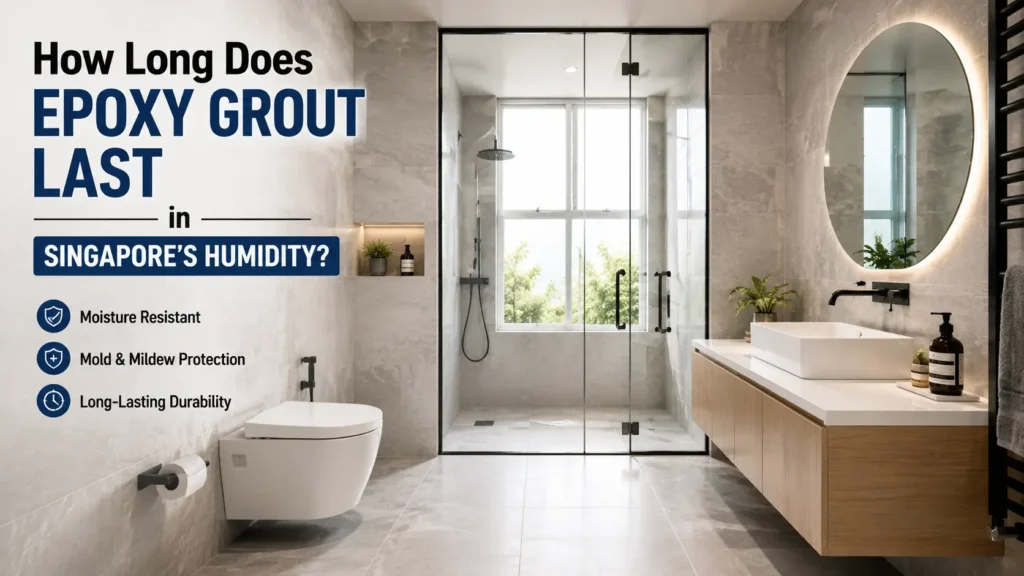
If you’re planning a bathroom, kitchen, balcony, or commercial renovation in Singapore, one common question is: how long does epoxy grout last in Singapore’s humidity?
The short answer is that high quality epoxy grout can last 15 to 25 years or more when installed correctly. Unlike traditional cement grout, epoxy grout is highly resistant to moisture, mold, stains, and humidity, making it a popular choice for Singapore’s tropical climate.
Why Singapore’s Humidity Affects Grout
Singapore experiences high humidity levels throughout the year, often ranging between 70% and 90%. Constant exposure to moisture can cause many building materials to deteriorate faster.
Traditional cement grout often faces problems such as:
- Mold growth
- Mildew buildup
- Water absorption
- Discoloration
- Cracking over time
Because cement grout is porous, it absorbs moisture and dirt more easily. This can shorten its lifespan, especially in wet environments like bathrooms and kitchens.
Epoxy grout performs differently because it is non-porous and highly water resistant.
Average Lifespan of Epoxy Grout
In Singapore’s humid conditions, professionally installed epoxy grout can typically last:
| Area | Expected Lifespan |
|---|---|
| Residential Bathrooms | 15 to 25+ years |
| Kitchens | 15 to 25+ years |
| Balconies | 10 to 20+ years |
| Swimming Pool Areas | 15 to 25+ years |
| Commercial Properties | 10 to 20+ years |
Actual lifespan depends on factors such as installation quality, maintenance practices, and the level of daily traffic.
Why Epoxy Grout Lasts Longer Than Cement Grout
Epoxy grout contains resin and hardener components that create a dense, waterproof surface after curing.
Key advantages include:
- Resistant to moisture absorption
- Highly stain resistant
- Prevents mold and mildew growth
- Resistant to cleaning chemicals
- Less likely to crack or shrink
- Maintains color longer
These benefits make epoxy grout particularly suitable for Singapore homes where humidity is a constant challenge.
Factors That Affect Epoxy Grout Lifespan
Installation Quality
Even premium epoxy grout can fail prematurely if installed incorrectly.
Common installation mistakes include:
- Poor surface preparation
- Incorrect mixing ratios
- Incomplete cleaning during installation
- Improper curing conditions
Hiring experienced professionals significantly improves long-term performance.
Cleaning and Maintenance
Epoxy grout requires less maintenance than cement grout, but basic care still helps maximize longevity.
Recommended practices:
- Wipe away standing water regularly
- Use non-abrasive cleaners
- Avoid harsh scraping tools
- Clean spills promptly
Routine maintenance helps preserve both appearance and durability.
Exposure to Sunlight
For outdoor applications such as balconies and terraces, prolonged UV exposure can affect some epoxy formulations over time.
When selecting grout for exterior spaces, choose products specifically designed for outdoor environments.
Tile Movement
Structural movement, poor substrate preparation, or shifting tiles may affect grout performance regardless of material type.
A properly prepared tile installation system contributes to longer grout life.
Signs Your Epoxy Grout Is Reaching the End of Its Lifespan
Although epoxy grout is highly durable, eventual wear can occur.
Watch for signs such as:
- Visible cracking
- Separation from tile edges
- Persistent discoloration
- Surface erosion
- Water penetration behind tiles
If these issues appear, a professional inspection can determine whether repairs or replacement are necessary.
Is Epoxy Grout Worth It in Singapore?
For many homeowners, the higher upfront cost of epoxy grout is justified by its long lifespan and lower maintenance requirements.
Benefits include:
- Reduced mold issues
- Easier cleaning
- Better aesthetics over time
- Lower long-term maintenance costs
- Improved resistance to Singapore’s humid climate
In areas frequently exposed to moisture, epoxy grout often delivers better long-term value than traditional cement grout.
Frequently Asked Questions
Can epoxy grout become moldy in Singapore?
Epoxy grout is highly resistant to mold because it does not absorb water like cement grout. However, surface dirt and soap residue can still support mold growth if cleaning is neglected.
Does epoxy grout require sealing?
No. Unlike cement grout, epoxy grout is non-porous and generally does not require sealing.
Can epoxy grout crack over time?
While more resistant to cracking than cement grout, cracking can still occur due to substrate movement, poor installation, or structural issues.
Is epoxy grout suitable for HDB bathrooms?
Yes. Epoxy grout is commonly used in HDB bathrooms because of its excellent moisture resistance and long lifespan.
Final Thoughts
In Singapore’s humid climate, epoxy grout can typically last between 15 and 25 years or even longer when professionally installed and properly maintained. Its resistance to moisture, stains, mold, and mildew makes it one of the most durable grout options available for bathrooms, kitchens, balconies, and commercial spaces.
For property owners seeking a long-term flooring and tiling solution, epoxy grout remains one of the smartest investments for Singapore’s challenging tropical environment.