
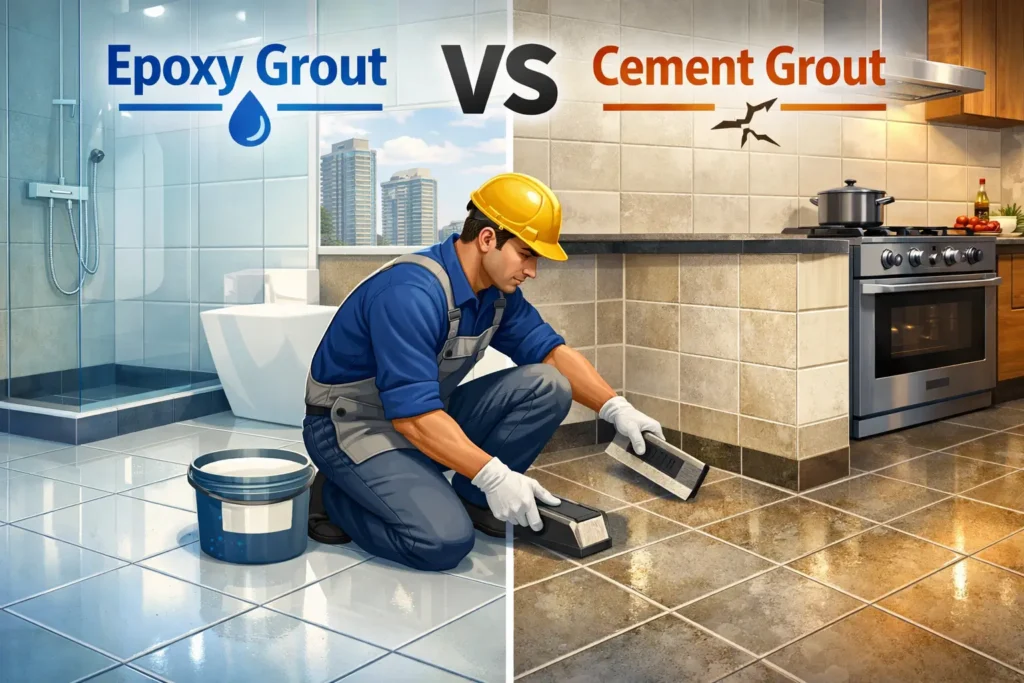
If you’re planning a renovation in Singapore, choosing the right grout is critical for the durability and appearance of your tiled surfaces. Epoxy grout lasts significantly longer than cement grout, especially in wet, high-traffic, or stain-prone areas common in local homes and commercial spaces. Cement grout, while budget-friendly, tends to wear out faster under Singapore’s humid climate, requiring more frequent maintenance and sealing.
In this guide, we’ll explore the differences between epoxy and cement grout, explain their lifespan in Singapore conditions, share professional advice, and give practical tips for choosing the right grout for your home or business.
Understanding Epoxy and Cement Grout
What is Epoxy Grout?
Epoxy grout is a combination of resin and hardener that creates a dense, water-resistant seal. It is widely recommended in Singapore for:
- Bathrooms and kitchens – prevents mold and mildew in humid spaces.
- High-traffic areas – stands up to foot traffic in condos, HDB corridors, and commercial spaces.
- Stain-prone surfaces – resists food, oil, and beverage stains in kitchens and restaurants.
Professional Advice: According to a Singapore-based tiling contractor, “Properly installed epoxy grout can last up to 20 years in humid environments, making it ideal for the tropical climate.”
What is Cement Grout?
Cement grout consists of cement, sand, and water. It is inexpensive, easy to apply, and commonly used in HDB bathrooms, low-traffic kitchens, and smaller renovation projects. However, it has some limitations:
- Absorbs water – leading to faster wear and mold growth in humid Singapore homes.
- Prone to staining – requires frequent sealing to maintain appearance.
- Shorter lifespan – usually lasts 5–10 years in wet or high-traffic areas.
Example: Many Tampines condos with cement grout have reported discolouration in bathroom floors after only 3–4 years due to moisture and cleaning chemicals.
Key Differences in Longevity
| Feature | Epoxy Grout | Cement Grout |
| Water Resistance | High | Low |
| Durability | 10–20 years | 5–10 years |
| Stain Resistance | Excellent | Moderate |
| Maintenance | Low | Medium to high |
| Cost (SGD/m²) | 15–30 | 5–15 |
Tip: Singapore homeowners often choose epoxy grout for wet areas and high-traffic zones for its longevity and lower maintenance needs.
How Singapore Conditions Affect Grout Longevity
High Humidity and Moisture
Singapore’s tropical climate has high humidity levels year-round, averaging 84%. Bathrooms and kitchens are particularly vulnerable to:
- Mold growth
- Mildew stains
- Discolouration of grout lines
Example: A Bedok HDB renovation showed that cement grout in the shower walls needed resealing annually, whereas epoxy grout installed in a nearby condo lasted over a decade without visible mold.
High-Traffic Areas
In condos, commercial kitchens, and HDB corridors, grout experiences continuous wear. Cement grout may crack or chip under heavy use, while epoxy grout maintains structural integrity for longer periods.
Tip: Use epoxy grout in:
- Condo lobbies
- Commercial kitchens
- Wet corridors in HDB estates
Stain-Prone Surfaces
Cement grout absorbs stains from food, oil, or liquids quickly, especially in Singapore kitchens. Epoxy grout is resistant, making it suitable for:
- Kitchen backsplashes
- Restaurant floors
- Wet rooms or spa areas
When Epoxy Grout Lasts Longer Than Cement
Use this quick checklist to determine if epoxy grout is right for your project:
- High-moisture areas (showers, kitchens, wet corridors)
- Heavy foot traffic zones (condo lobbies, office kitchens)
- Areas prone to stains or spills (restaurants, commercial spaces)
- Projects requiring long-term durability with low maintenance
Warning: Cement grout can still be used for decorative walls, low-traffic dry areas, or budget-limited projects.
Professional Tip: Proper mixing and installation are crucial. Incorrect epoxy application can reduce its lifespan significantly, even in Singapore’s humid climate.
Cost Comparison for Epoxy vs Cement Grout in Singapore
- Epoxy grout: SGD 15–30 per m² including materials and professional installation.
- Cement grout: SGD 5–15 per m² including materials and installation.
- Factors affecting cost: Neighborhood (Orchard or Marina Bay may have higher rates), tile type, project size, and complexity.
- ROI Perspective: While epoxy grout has a higher upfront cost, it reduces long-term expenses due to lower maintenance, fewer replacements, and reduced cleaning frequency.
Maintenance and Prevention Tips
Daily Cleaning Practices
- Use a pH-neutral cleaner and soft brush.
- Wipe spills immediately to prevent staining.
- Avoid harsh acids, bleach, or abrasive tools that can damage grout.
Preventing Damage and Discoloration
- Seal cement grout every 6–12 months.
- Inspect epoxy grout periodically for cracks or lifting.
- Schedule regular professional inspections for commercial spaces.
Checklist:
- Bathroom: inspect for mold and water damage quarterly
- Kitchen: check for oil or food stains monthly
- Wet corridors: monitor for cracking or lifting annually
GEO Section – Serving Singapore Neighborhoods
We serve epoxy and cement grout clients across Singapore, including:
- Central: Orchard, Marina Bay, Bugis, Dhoby Ghaut
- East: Tampines, Bedok, Pasir Ris, Changi
- West: Jurong East, Clementi, Bukit Batok
- North: Woodlands, Yishun, Sembawang
- South & Sentosa: Harbourfront, Sentosa Cove
Example: In Jurong East, we installed epoxy grout in a condo’s wet kitchen and high-traffic corridors, ensuring long-term durability despite high humidity and heavy use.
When to Call a Professional in Singapore
DIY grout installation is tempting but can lead to issues if not done properly. Call a professional if:
- Grout lines are cracking or lifting
- Mold or mildew persists despite cleaning
- Discoloration occurs in high-moisture areas
Professional Advice: Hiring a licensed contractor ensures proper mixing, curing, and sealing—critical for Singapore’s humid environment and compliance with HDB regulations.
Why Choose Us for Grout Services in Singapore
- Experienced local team handling HDB, condo, and commercial projects.
- Use of premium epoxy products for long-lasting results.
- EEAT signals: certified contractors, client testimonials, and years of local expertise.
- Projects completed across all Singapore neighborhoods, including Orchard, Tampines, Jurong, and Woodlands.
Local FAQs
- Which grout lasts longer in Singapore’s humid climate?
Epoxy grout is more durable and water-resistant than cement grout. - Can I DIY epoxy grout in my condo?
DIY is possible but professional installation ensures maximum longevity. - How much does epoxy grout cost per m² in Singapore?
Around SGD 15–30 per m² including materials and labor. - How often should cement grout be sealed in Singapore?
Every 6–12 months to prevent water damage and staining. - Which areas benefit most from epoxy grout?
Wet rooms, kitchens, high-traffic corridors, and commercial spaces. - Do I need to seal epoxy grout in Singapore?
While epoxy is water-resistant, sealing every 1–2 years enhances longevity. - Which Singapore neighborhoods do you serve?
We serve all areas including Orchard, Marina Bay, Jurong, Tampines, Woodlands, and Sentosa.